 English (UK)English (UK)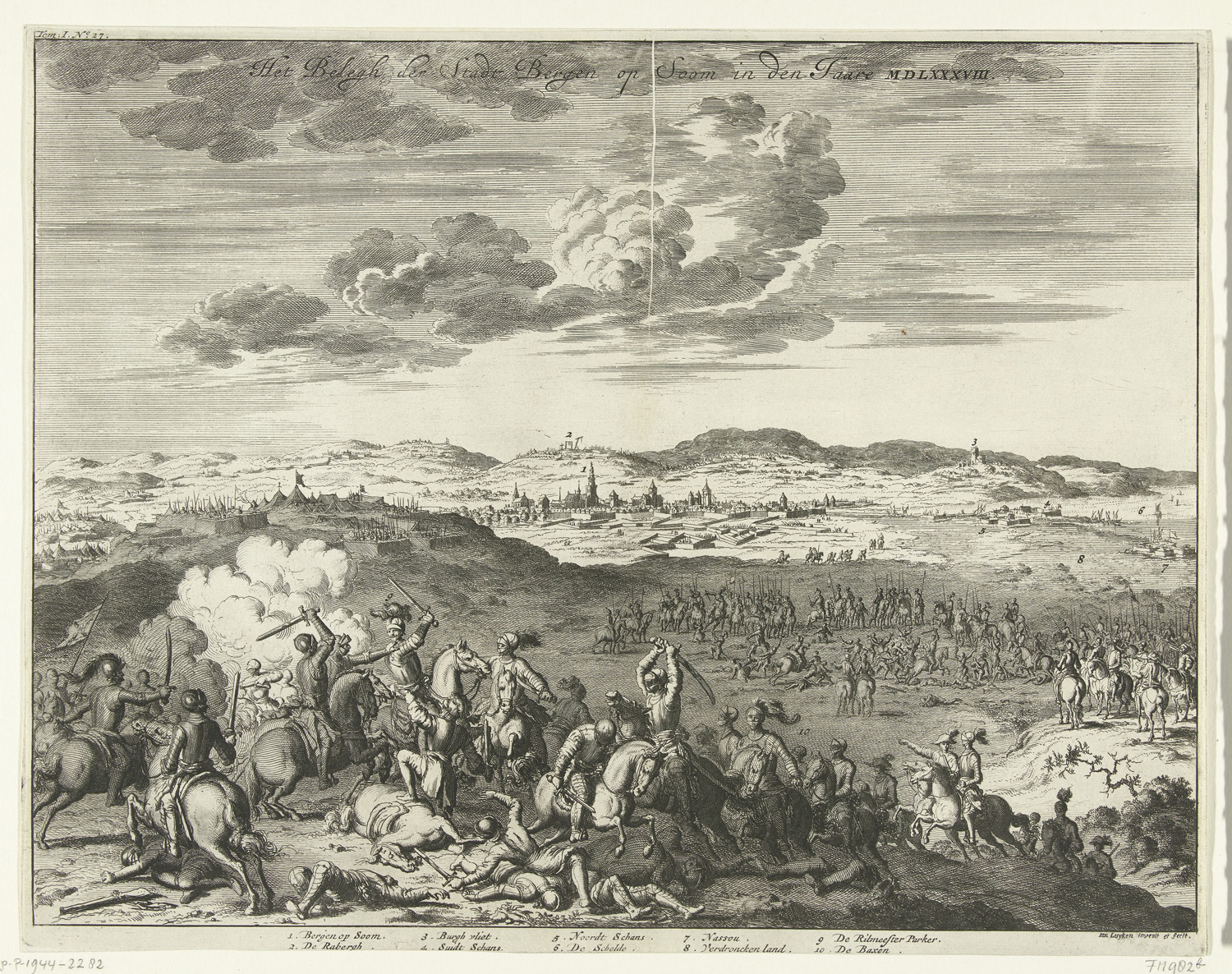
The Siege of Bergen op Zoom in 1588 was a crucial episode in the Eighty Years' War (1568-1648). Spanish troops, led by the renowned general Alexander Farnese, Duke of Parma, attempted to capture the city as part of their strategy to gain control of the rebellious Dutch provinces. Despite a prolonged siege, the Spanish attempt failed, marking a significant turning point in the struggle against Spanish domination.
In the late 16th century, Bergen op Zoom was one of the most important garrison towns in the Republic of the Seven United Netherlands. The town was strategically located between Antwerp, which had been captured by the Spanish in 1585, and the Zeeland waters, which were under the control of the rebels. This made Bergen op Zoom a crucial link in the defence of the Republic against further Spanish attacks.
Alexander Farnese, who led the Spanish troops, wanted to capture the city to cut off the supply to the rebellious provinces and force a breakthrough towards Zeeland and Holland. His army, consisting of several thousand well-trained soldiers, began the siege of the city in September 1588.
The Spanish troops attempted to capture Bergen op Zoom in various ways. They dug siege trenches, built redoubts, and launched several assaults. The defence of the city was led by Peregrine Bertie, Lord Willoughby, an English commander who, with the support of the English and the States-General, managed to organise the defence.
An important element of the defence was the tactic of the Dutch and English troops to make sorties and constantly keep the besiegers under pressure. The defenders also made use of the marshy surroundings and nearby waterways to hinder the Spanish troops.
On 13 November 1588, the Spanish attempted one final large-scale assault, but it failed due to fierce resistance and a surprise attack from the defenders. Exhausted and demoralised, the Spanish troops retreated shortly thereafter, leading to the siege's failure.
The failure of the siege was a massive setback for the Spanish. It proved that even a strong besieging army under Farnese was not invincible and gave the rebels renewed courage. Furthermore, it became clear that the Republic, with support from England and other allies, was capable of repelling Spanish domination.
The defence of Bergen op Zoom strengthened the Republic's position in the war and forced the Spanish to reconsider their strategy. Although the conflict would continue for decades, the failure of the siege in 1588 was a significant moment in the Eighty Years' War and a symbol of the growing resistance to Spanish rule.
The Siege of Bergen op Zoom in 1588 was one of the key moments in the struggle between the Republic and Spain. Despite the superior Spanish military strength, the city managed to hold out, partly thanks to its decisive defence and international support. The failure of the Spanish siege demonstrated the vulnerability of the Spanish strategy and gave the rebels a strategic and moral advantage in the ongoing war.
The content is protected by copyright. Copying is not possible.
 Nederlands Nederlands English (UK)
 Deutsch
 Français