 English (UK)English (UK)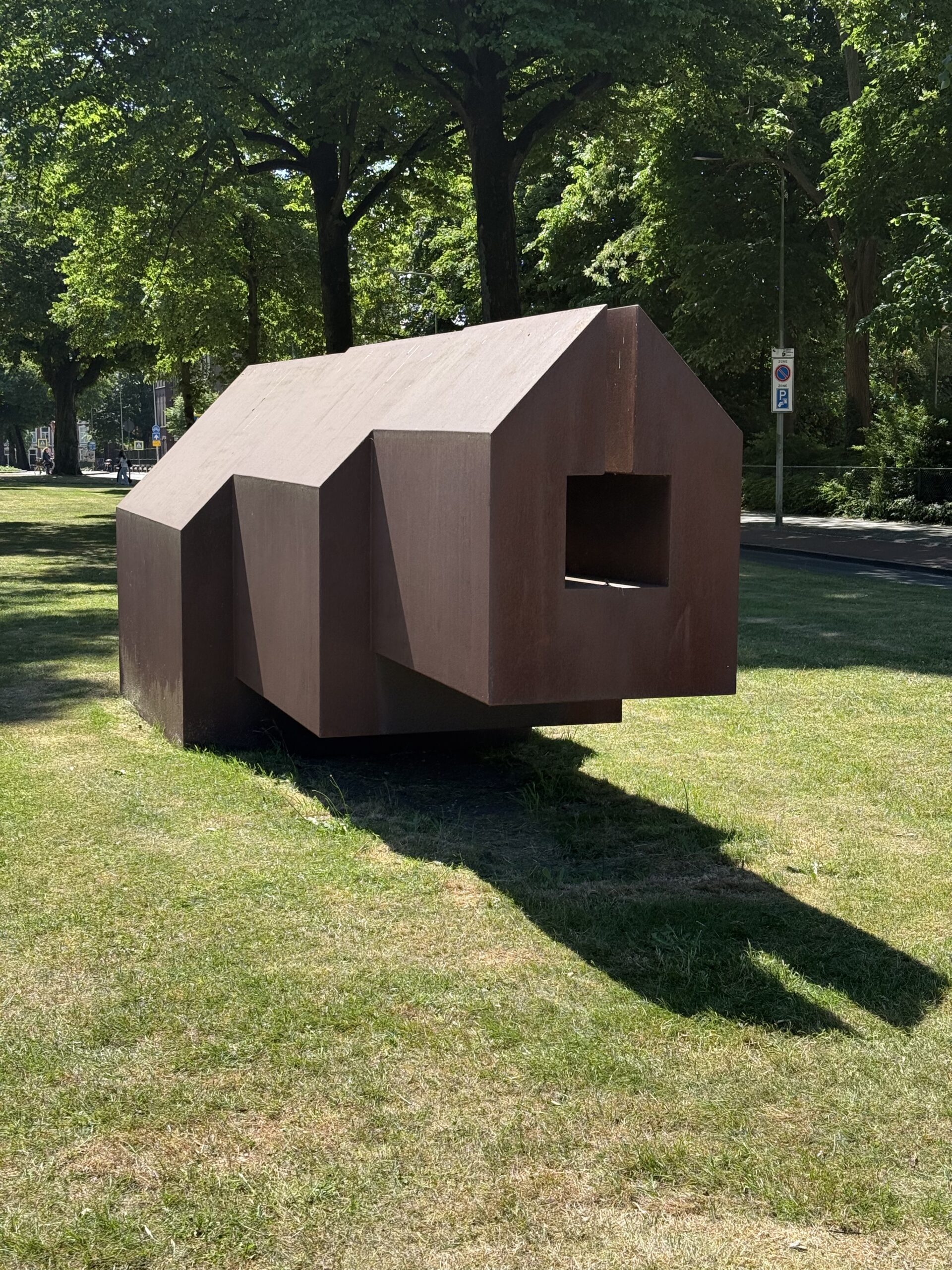
In the park on Burgemeester Stulemeijerlaan, you'll find the impressive artwork “Merck toch hoe sterck”. This fascinating sculpture carries rich symbolism and is deeply rooted in the city's history, which was once a fortified town. As a result, the past remains vivid in the current streetscape.
The artwork is a creation by the renowned artist Niko de Wit, whose fascination with the forms and volumes of defensive structures offers a sensory experience to the viewer. The simplicity and functionality of these military structures, almost abstract in their architecture, particularly appeal to the artist. Niko de Wit masterfully captures these characteristics in his work, giving the viewer a sense of the historical significance and strategic insight behind these buildings.
In this artwork, elements of a fortification are abstracted and represented in a subtle yet powerful way. A striking feature is the cross-section profile, reminiscent of a lunette. A lunette was a defensive work often used in fortification architecture, and its presence in the image directly refers to this turbulent period in urban development.
In addition, there is the intriguing repetition of an abstracted house form, which, according to a careful mathematical principle, progressively diminishes in size and shifts. This results in a layered composition that is both dynamic and harmonious, demonstrating not only physical change but also historical shifts through time. This symbolism reminds the viewer that cities, despite their fixed structures, are in constant flux and renewal, engaging in a continuous dialogue with their past.
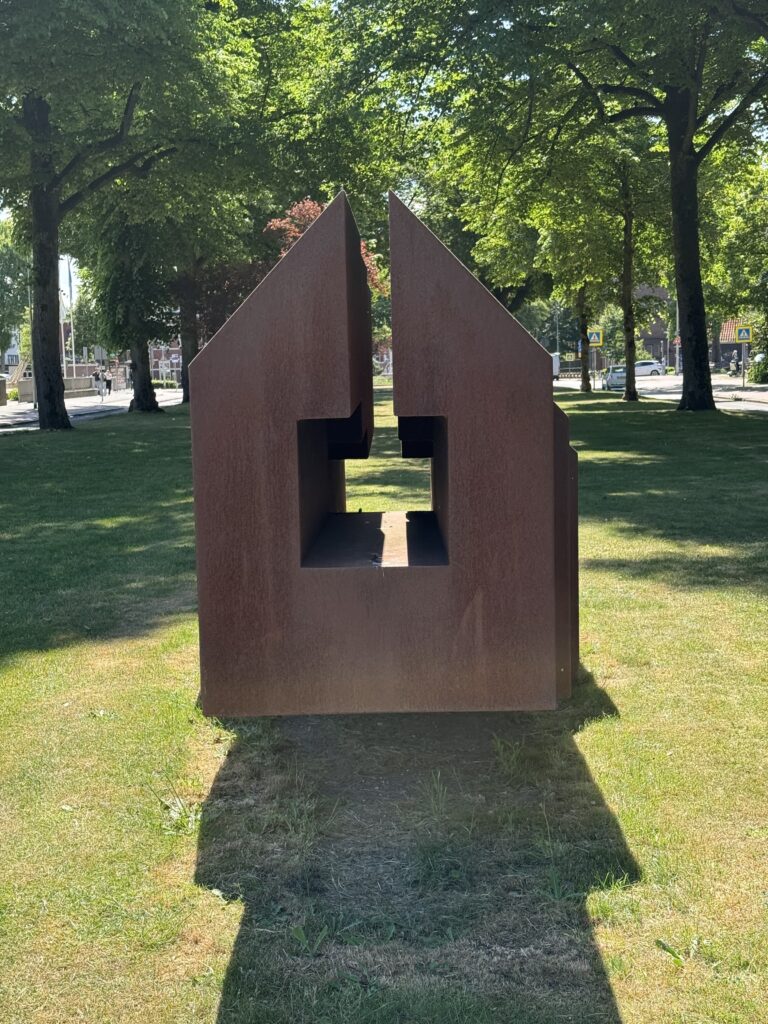
A corridor or tunnel in the image evokes images of supply tunnels in a fortress. The shape of the house suggests living within walls, while the whole can also be interpreted as a defensive work with a loophole. The title comes from a Geuzen song by Adriaan Valerius from 1622, which became the anthem of Bergen op Zoom.
Niko de Wit's artwork “Merck toch hoe sterck” invites contemplation and leaves a lasting impression on everyone who passes by it in the park. It is more than a work of art; it is a tribute to the resilience and ingenuity that have characterised the city through the ages, and it provides a rare glimpse into the complex relationship between the present and the past. In this way, history remains visible, tangible, and relevant to the modern city dweller and visitor, who are briefly carried away in time.
For more information about this image and the other images in our city, visit KidOR, Foundation for Art in Public Spaces.
The content is protected by copyright. Copying is not possible.
 Nederlands Nederlands English (UK)
 Deutsch
 Français