 English (UK)English (UK)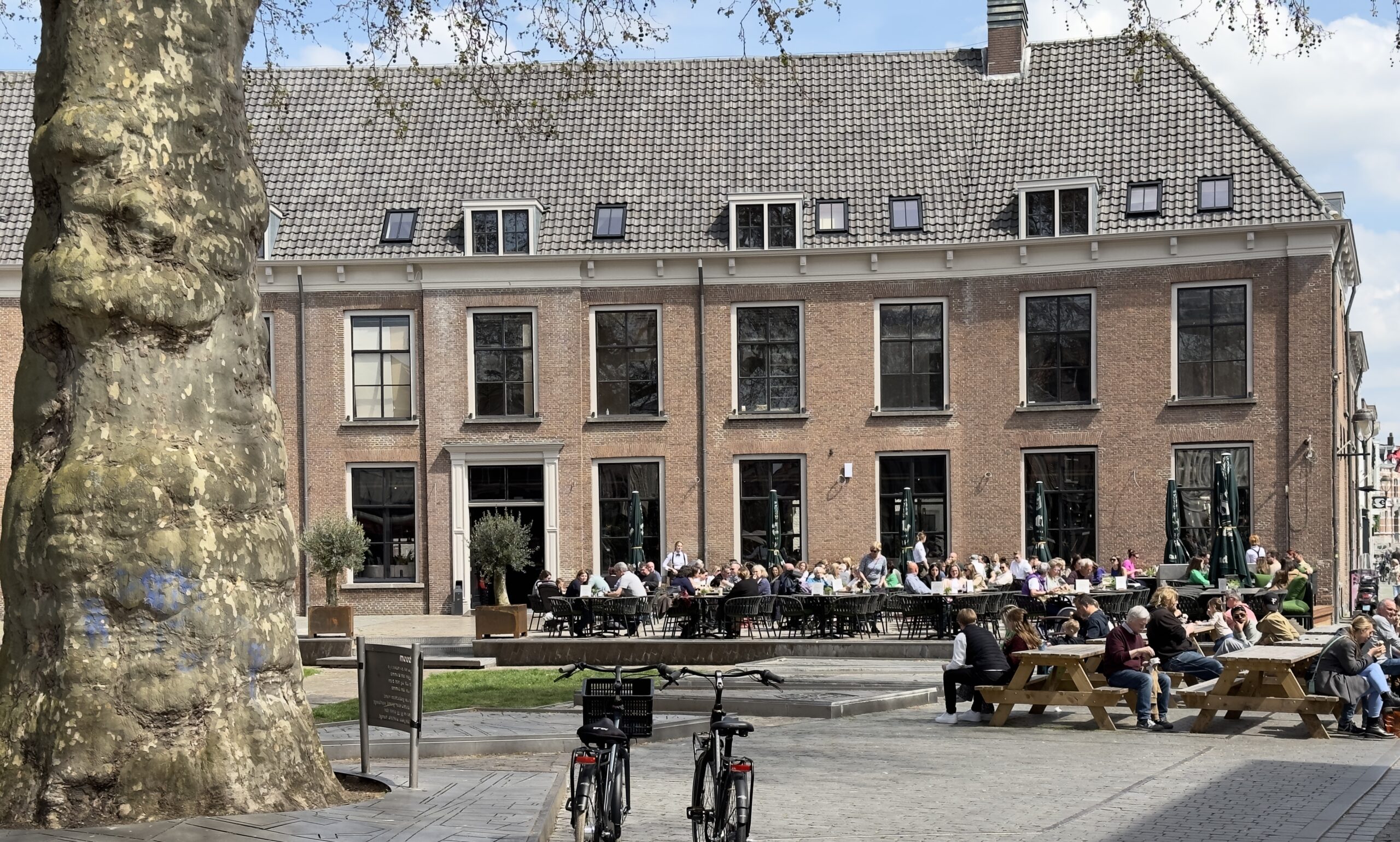
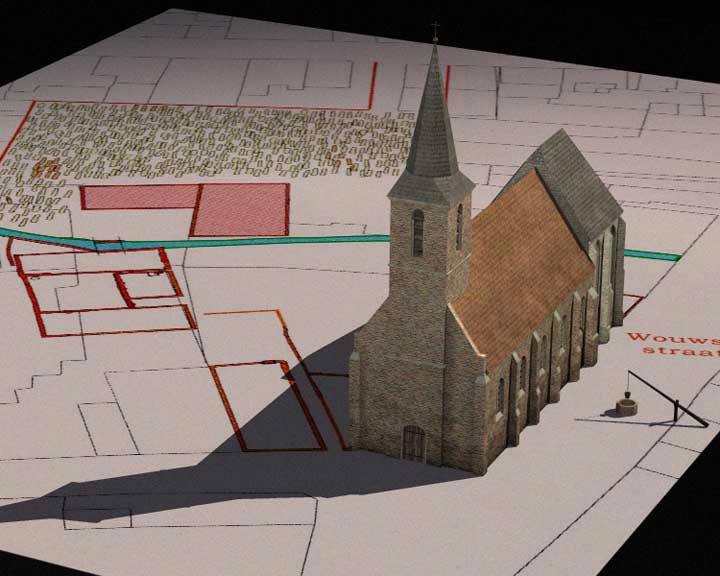
The stately national monument, also known as the former Government House, has a rich and eventful history dating back to the 13th century. Originally, it was founded as the St. Maarten's Hospice, a place where the sick and needy were given shelter and care. At that time, the hospice was an indispensable facility for the community of Bergen op Zoom and its surroundings. Medical care was primitive compared to today's standards, but the hospice played a crucial role in the well-being of the population. This also included a chapel. This has long since disappeared. Parts of the foundation have been found during recent excavations. Based on this, a reconstruction has been made. The intention is that the contours of this chapel will become visible in the terrace and the street.
In 1525, the building underwent a transformation and was repurposed as a Latin school. This was during the Renaissance, a period when education and science became increasingly important. The Latin school was a prestigious institution where the youth of Bergen op Zoom could learn the classical languages. Many prominent figures from the city's history took their first steps into the world of knowledge and culture here.
From the 1600s onwards, the building was repurposed and served as the residence of the Governor of Bergen op Zoom. This period marked a time of political and military significance for the city. Bergen op Zoom was strategically located and played an important role in the defence of the country. The Governor was an influential figure and his residence, the Government House, was a symbol of his power and status.
In 1771, the National Monument underwent a major renovation. The building was completely modernised to meet the demands and tastes of the time. During this renovation, the St. Maarten Chapel, which stood next to the building, was demolished. In its place, a beautifully laid-out front garden was created, adding extra allure to the Governor's Residence. The garden became a place of peace and representation, where the Governor could receive his guests and impress them with the splendour and magnificence of his residence.
In the 19th century, the former national monument's purpose changed again, with the building being used as a military hospital. This period was marked by the Napoleonic Wars and subsequent conflicts, during which there was a great need for medical care for wounded soldiers. Various wings were added to the original building to increase the hospital's capacity. An extension was built along the Wouwsestraat in the same style as the main building, giving the complex an impressive and uniform appearance.
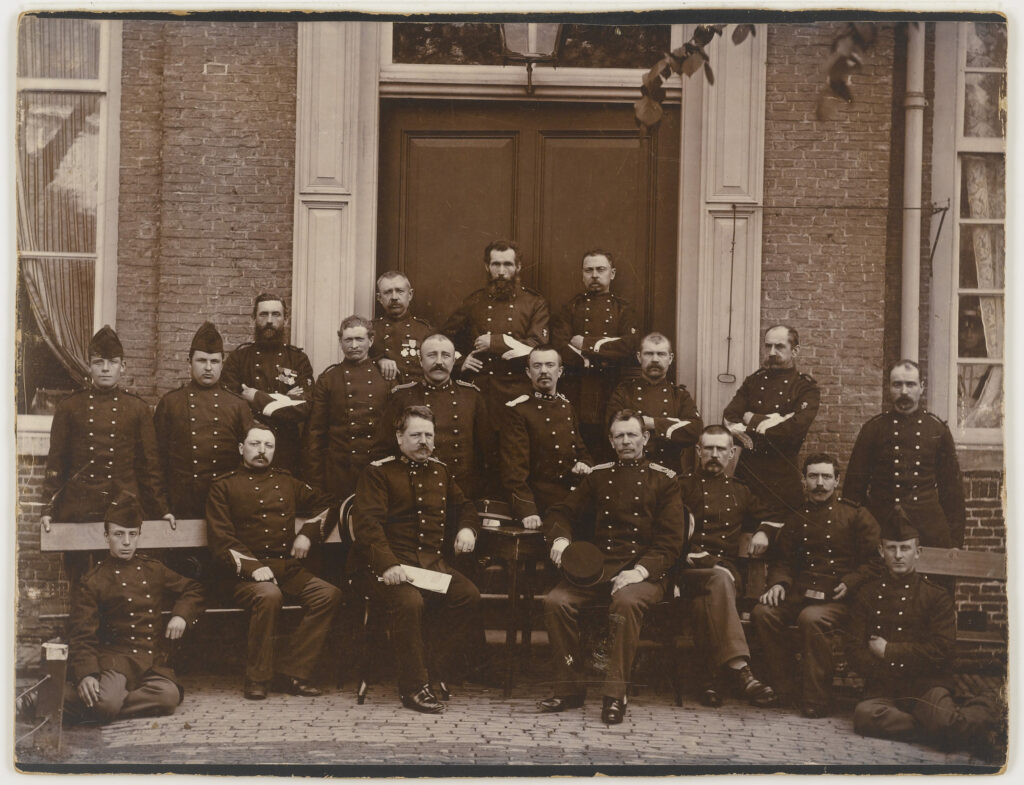
Until 1922, the Government Building served as a military hospital before subsequently being used for administrative services for the Ministry of Defence. Years later, the national monument came into the possession of ABN AMRO and a bank branch was established there. In the 1990s, it was transformed into a shopping arcade, ultimately becoming Sportplaza and Duthler. In the 2000s, it changed once more into a Basic Fit location with a vacant retail unit below. Until 2023! From that point on, the Government Building has been a thriving hospitality business with 17 residences above, under the name The Governor.
A distinctive feature of the Government House is the presence of the “Fat Tree”, originally in the front garden. See separate item. This imposing tree, approximately 150 years old, neatly closes the perspective of Zuivelstraat. It is a beloved landmark for the city's inhabitants and a symbol of the National Monument's long and rich history.
Today, the National Monument still stands as a majestic and historic building in Bergen op Zoom. It reminds us of the many transformations it has undergone through the centuries, and of the important role it has played in the city's history. Whether it served as a guesthouse, school, governor's residence, military hospital or restaurant, the National Monument remains a witness to the past and a valuable heritage for future generations.
This monument is found in this city tour.
The content is protected by copyright. Copying is not possible.
 Nederlands Nederlands English (UK)
 Deutsch
 Français