 English (UK)English (UK)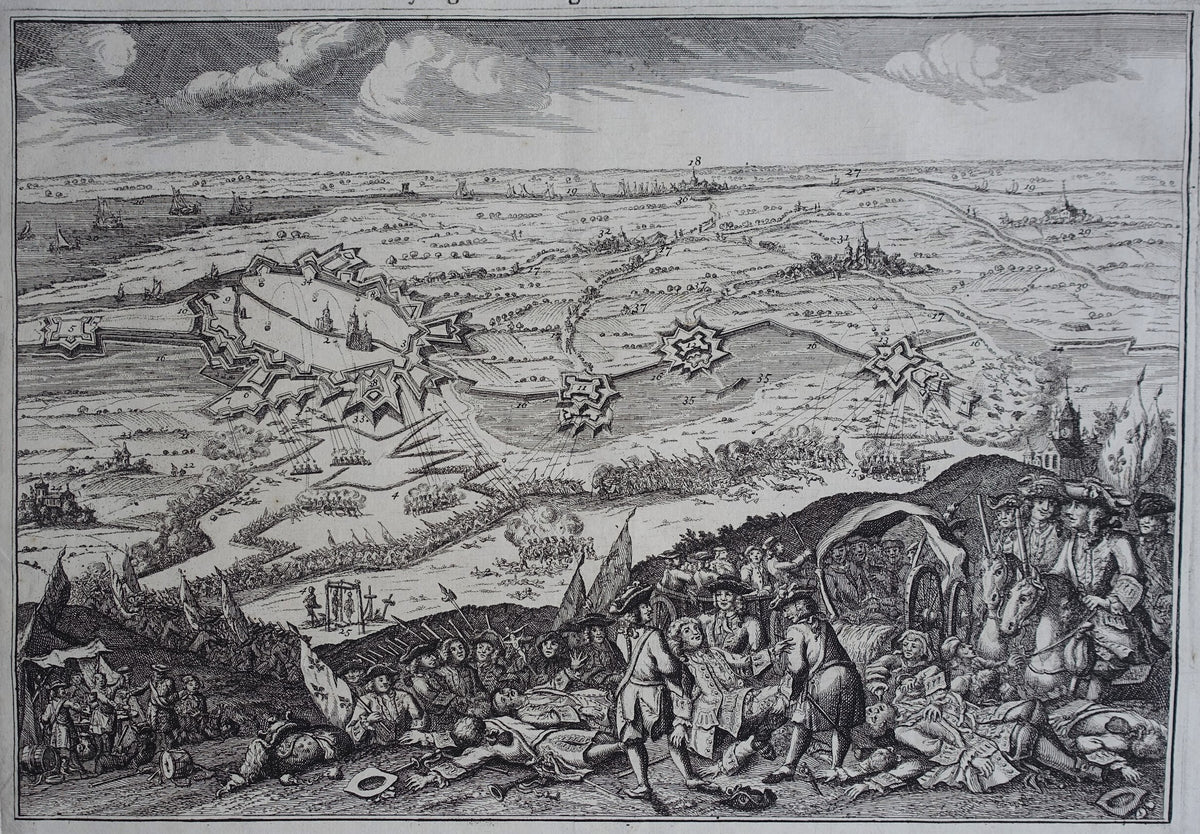
During the 18th century, one of the most dramatic events took place in the Dutch town of Bergen op Zoom: its siege and eventual capture by French troops. This strategic town, situated in the mid-west of the Netherlands, was of great importance due to its location and fortified defences, which were considered almost impregnable. The year was 1747, a period when the War of the Austrian Succession was at its height. This war, which pitted several European great powers against one another, not only influenced political and military strategies but also affected ordinary citizens. Bergen op Zoom, as a key defensive stronghold, soon became central to the military campaigns of that year. The French troops, led by the experienced Marshal Maurice of Saxony, set their sights on capturing the town. They were aware that taking Bergen op Zoom would be a significant victory for them, given its strategic location and the moral blow it would deal to the defending coalition. Under the marshal’s command, the French began a systematic siege, employing new military techniques and large-scale bombardments. These techniques involved not only the deployment of heavy artillery, but also the digging of trenches and underground tunnels to get beneath the fortress walls. Within the city itself, there was great tension and uncertainty. The inhabitants, under the command of Isaac Cronström, prepared for what could be a long and arduous struggle. The walls of Bergen op Zoom had been fortified since the Middle Ages, and the defenders hoped that these fortifications would be able to withstand the attack. However, the town also faced its own challenges; food and supplies were limited, and the constant bombardments caused destruction and chaos within the walls. After weeks of intense fighting and heavy shelling, the French troops succeeded in forcing a decisive breakthrough on 16 September 1747. With a surprise attack, in which they entered the inner city via a poorly defended bastion, they managed to overcome the city walls. The unexpected capture led to panic among the defenders and the inhabitants. Many of the defending troops surrendered or were taken prisoner, and within a short time the city was completely under French control. The fall of Bergen op Zoom was a severe blow to the coalition forces fighting against the House of Bourbon. It signified not only the loss of an important defensive stronghold, but also a strengthening of the French position in the region. For the city itself, the occupation meant a period of French rule, accompanied by looting and the imposition of heavy taxes on the population. This siege is still remembered today as one of the most remarkable military successes of the French forces in the eighteenth century and symbolises the devastation and shifting power dynamics that characterised this period of European history.
The content is protected by copyright. Copying is not possible.
 Nederlands Nederlands English (UK)
 Deutsch
 Français