 English (UK)English (UK)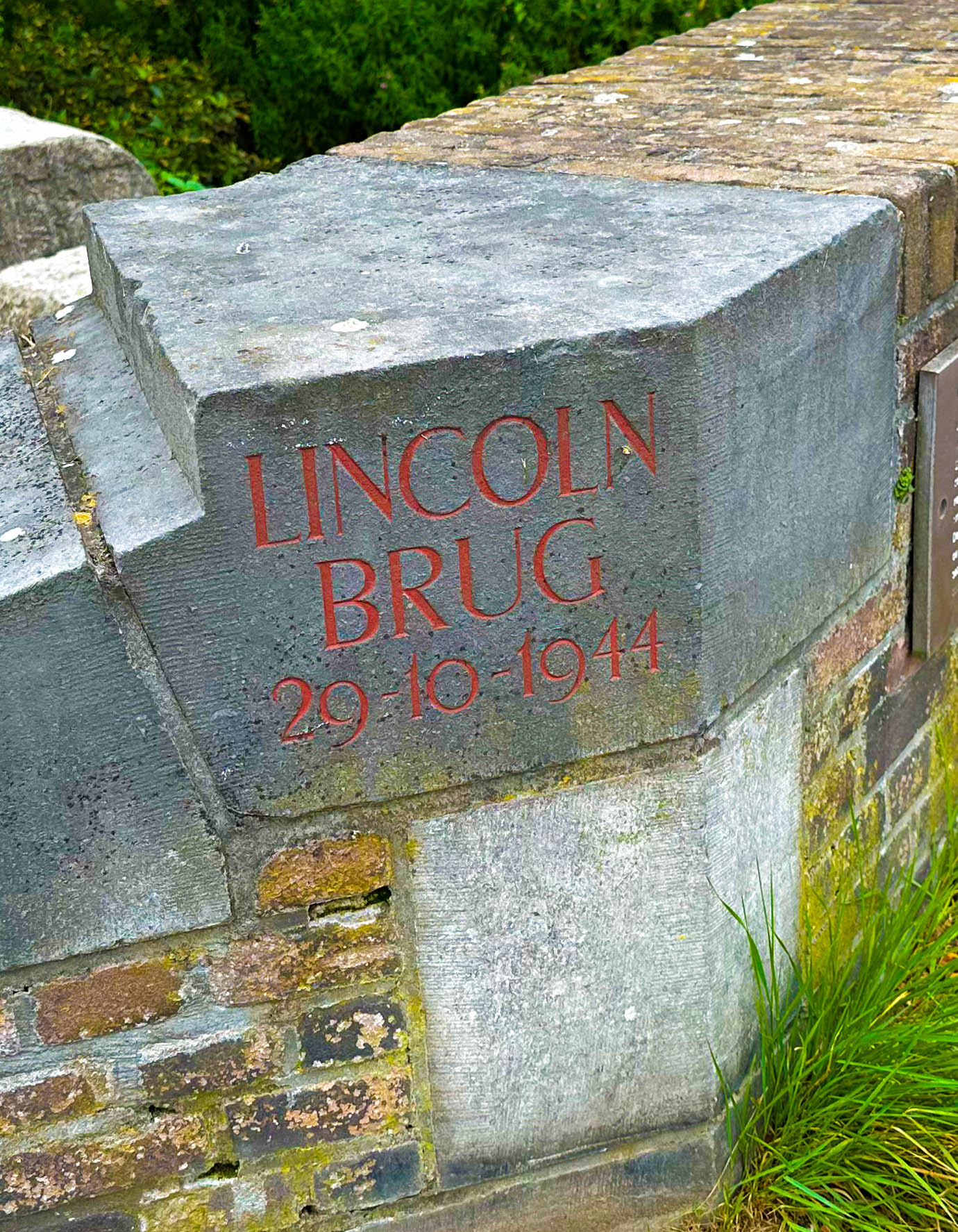
The liberation of Bergen op Zoom's city centre proved to be an easy task for the 4th Canadian Armoured Division. The complete clearance of the rest of the town was a much tougher undertaking. In the northern part of the city, fierce street fighting broke out along a former medieval peat channel between Canadian infantry and German paratroopers.
On Friday afternoon, 27 October, the first tanks of the South Alberta Regiment reached the Grote Markt in Bergen op Zoom. Although German troops were still positioned on the north side of the town, the residents of Bergen gave their liberators a rapturous welcome. In the evening, the first exchanges of fire began between the Canadians and German paratroopers from the 6th Fallschirmjäger Regiment, who had established themselves in the houses and buildings on the north side of the Zoom, a former medieval peat canal. Dislodging the enemy from these positions proved to be a difficult task and led to very fierce street fighting that would ultimately last for three days.
In the afternoon of 28 October, the Argylls and Sutherland Highlanders of Canada made an initial attempt to cross the Zoom. The crossing was thwarted by German machine-gun fire. Two subsequent attempts in darkness also failed. A second unit, brought up from the Lincoln and Welland Regiment, proved more successful. They attempted late on Saturday evening to establish a small bridgehead in the industrial area along the Zoom, a place where the channel is shallower. Tanks were also ready to support the crossing. The nighttime fighting that followed was confused and at times bordering on chaotic.
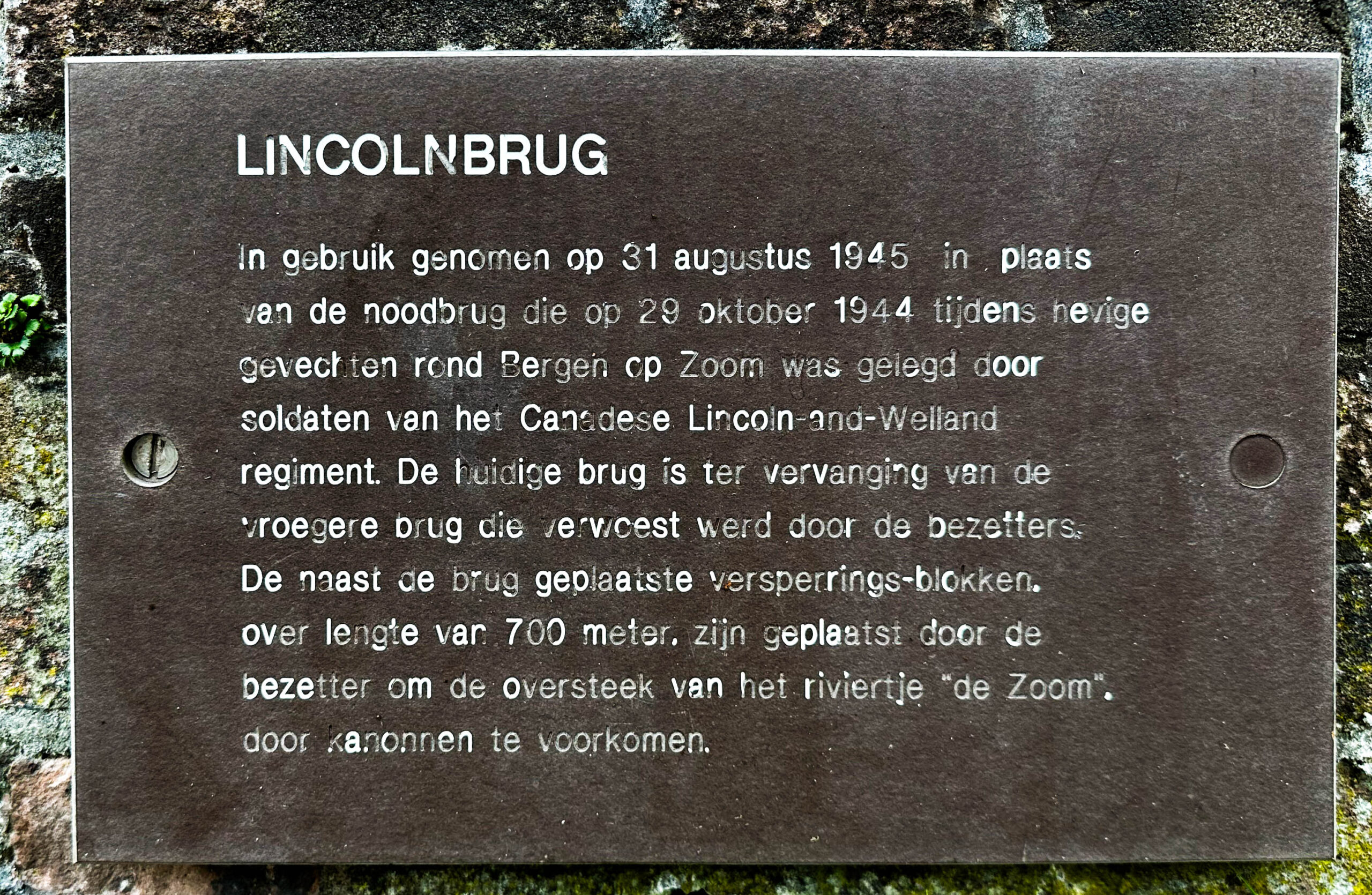
With great difficulty, a small group of Lincolns managed to reach the other side near a laundry. Hand-to-hand fighting broke out around the building and continued even into Sunday morning. Meanwhile, more and more Canadians succeeded in crossing the Zoom. Consequently, the German paratroopers abandoned the fight in the course of Sunday and retreated towards Steenbergen. The Canadian engineers set to work immediately and by Sunday evening the 8th Field Squadron had erected a temporary bridge across the Zoom, which was aptly named the ‘Lincoln Bridge’.
The fighting along the Zoom had been exceptionally fierce. The Canadians had once again underestimated the German resistance. Moreover, crossing the former peat canal proved much more difficult than had been anticipated. Casualties on both sides were high. The street fighting had cost the lives of dozens of soldiers. The damage in this part of the city was enormous.
To their great surprise, the retreating German paratroopers were not pursued by the Canadians. The reason for this was that the division's senior medical officer issued an order for 48 hours of absolute rest for all soldiers. This, however, did have the consequence that the German forces were able to establish a new defensive line elsewhere…
SOURCE: Liberation Route Europe
The photographs were taken in October 1944, photographer: J.H.M Weijts, collection WestBrabantsArchief.
(The photo can also be seen on the Liberation Route Europe website)
The photos were taken on 21 July 2024 by Maarten van ‘t Hof.

The content is protected by copyright. Copying is not possible.
 Nederlands Nederlands English (UK)
 Deutsch
 Français