 English (UK)English (UK)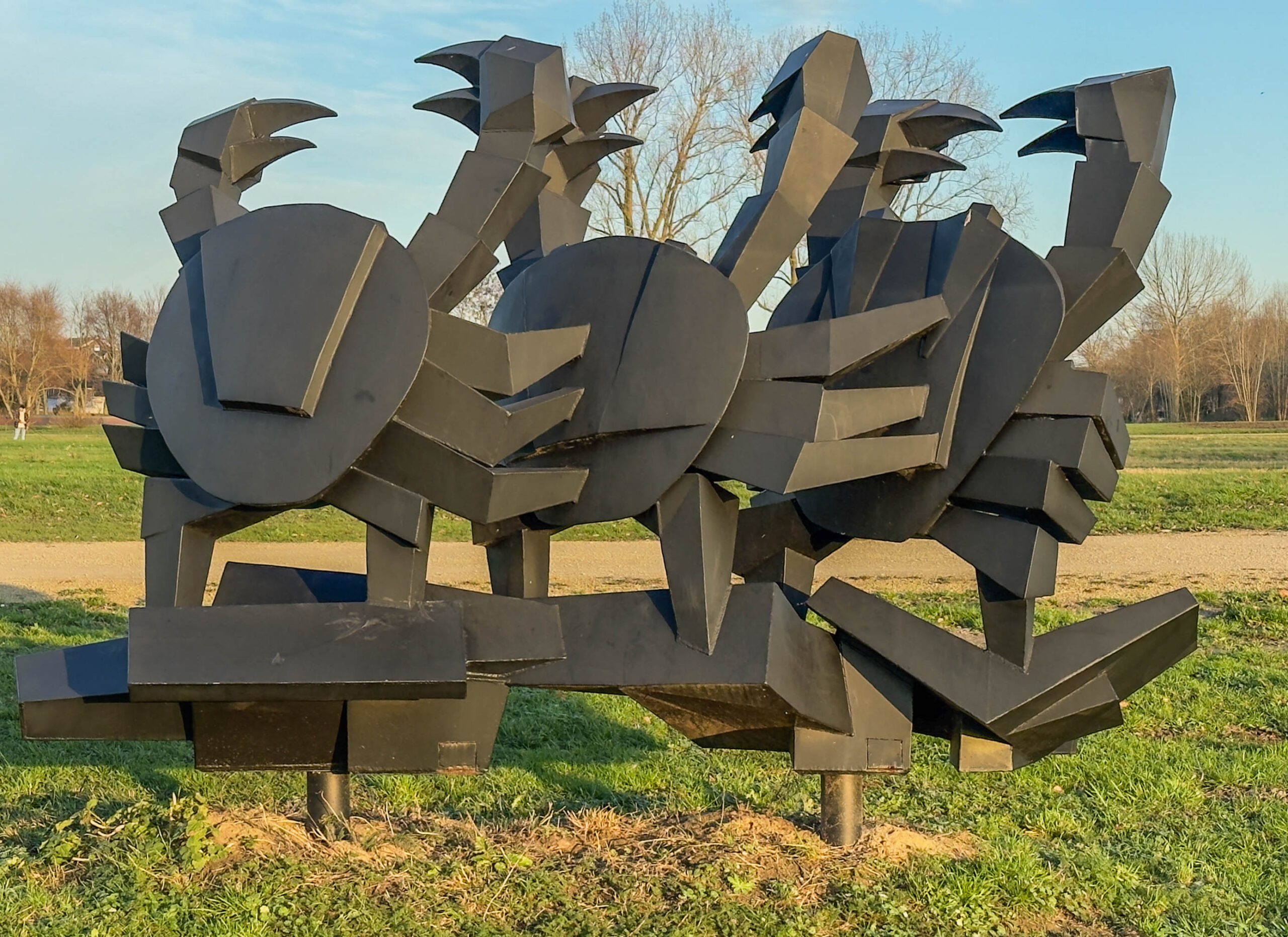
On the water's edge, where the Scheldt has dictated the city's rhythm for centuries, three 'Bergen op Zoom crabs' rise up. They seem to have crawled straight out of the living water and survey the city from their vantage point. This sculpture tells the story of Bergen op Zoom: a city that has always been connected to the water and to its own distinctive, proud inhabitants.
Sculptor Kees Keijzer gave the artwork a name that refers to the city's turbulent history: “Bergen op Zoom keeps you devout, supports the Spanish shears.” This commemorates the time when Bergen op Zoom was an important fortified city during the Eighty Years' War. Thanks to its strategic location on the Scheldt, the city played a key role in trade, defence and the connection between land and sea.
For centuries, Bergen op Zoom boasted a thriving harbour and lively annual markets. Merchants, ships, and visitors from far and wide brought prosperity and stories to the city. This openness made Bergen op Zoom strong, but also resilient: the city learned to defend itself and preserve its own character.
During the Shrovetide period, that identity is given a playful name. Bergen op Zoom is then called the Crabhole and its inhabitants are Crabs named. This image gives that tradition a fixed place in the city and connects history, folk culture, and humour.
Originally, the statue was located in Sint-Annastraat. Since 2002, it has had a beautiful spot in Stadspark Kijk in de Pot, directly on the Binnenschelde. Here, visitors can pause for a moment, gaze out over the water, and feel the story of a city that has always remained in motion.
More information about this image and the other images in our city can be found at KidOR, Foundation Art in Public Space.
The content is protected by copyright. Copying is not possible.
 Nederlands Nederlands English (UK)
 Deutsch
 Français